
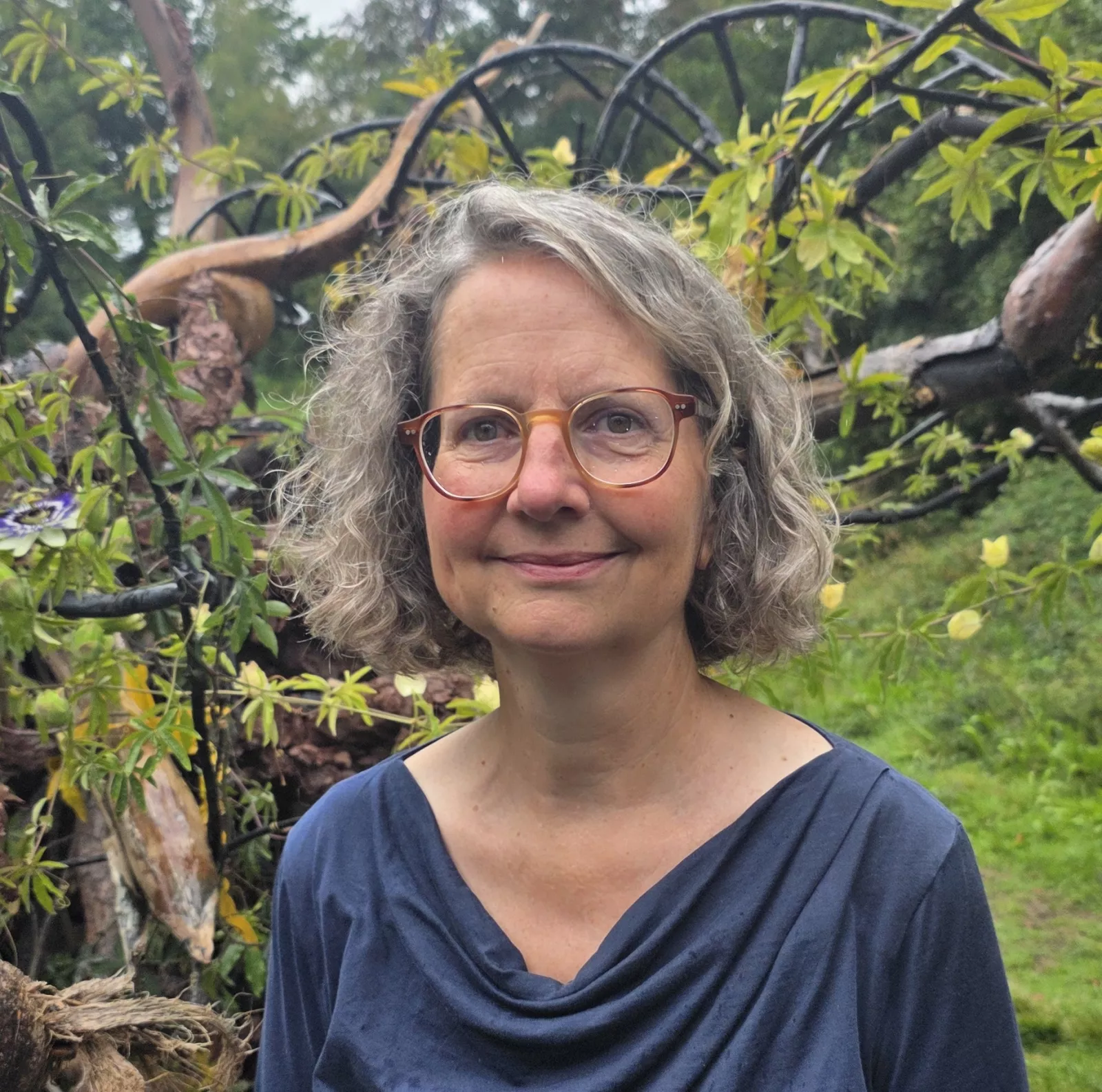
Katja Kwastek
Katja Kwastek researches and teaches on contemporary art and the environmental humanities.
Katja Kwastek is Professor of Modern and Contemporary Art History at the Vrije Universiteit Amsterdam (VU) and founding member of the Environmental Humanities Center Amsterdam. She is coordinator of the MA in Arts and Culture/Contemporary Art History and teaches in the RMA in Environmental Humanities and the BA in Media, Art, Design, and Architecture. Katja’s research focuses on processual art and aesthetics, as well as human–non human technology relations as reflected upon in contemporary art. From 2021 to 2025, she co-led a subproject on artistic research within the NWA consortium Pressing Matter: Ownership, Value, and the Question of Colonial Heritage in Museums. Katja is the author of Aesthetics of Interaction in Digital Art (Kwastek 2013) and editor of a 2019 issue of the ASAP Journal on the topic of slowness. From 2019 to 2022, she was associate editor of Environmental Humanities. Recent articles focusing on ecological art include “Capitalocene Art: Entanglements of Technology, Economy, and Geopolitics in Works of Femke Herregraven, Angela Melitopoulos, and Hito Steyerl” (Kwastek 2021a) and “Unanticipated Intimacies: A Collective Writing Experiment” (Kwastek 2021b). Within the JUST ART project, Katja leads research under the “Just Production” theme.
References
Kwastek 2013
Kwastek, Katja. Aesthetics of Interaction in Digital Art. Cambridge, MA: MIT Press, 2013.
Kwastek 2021a
Kwastek, Katja. “Capitalocene Art: Entanglements of Technology, Economy, and Geopolitics in the Works of Femke Herregraven, Angela Melitopoulos, and Hito Steyerl.” In Retracing Political Dimensions: Strategies in Contemporary New Media Art, edited by Oliver Grau and Inge Hinterwaldner, 194–210. Berlin, Munich, and Boston: De Gruyter, 2021.
Kwastek 2021a
Kwastek, Katja. “Unanticipated Intimacies: A Collective Writing Experiment.” In Mix & Stir: New Outlooks on Contemporary Art from Global Perspectives, edited by Helen Westgeest and Kitty Zijlmans, 97–104. Amsterdam: Valiz, 2021.