
Pursuing Climate Justice in Bonaire
Bonaire is particularly vulnerable to climate change. In 2026, the Hague ruled that the Dutch state had discriminated against the island by not doing more to help it prepare.
Bonaire—a low-lying island off the coast of Venezuela—is particularly vulnerable to the impacts of climate change. According to simulations undertaken by Vrije Universiteit Amsterdam on behalf of Greenpeace Nederland, Bonaire will “suffer excessively” from the inexorable rise of global temperatures, less predictable rainfall, surging sea levels, coral bleaching, cyclones, droughts, and floods (Van Beukering 2022 et al., 7). This, in turn, will hobble Bonaire’s economy, which is highly dependent on SCUBA divers drawn to the island’s western shore. By 2050, it is expected that some parts of the island will be permanently underwater.
Bonaire became a Dutch special municipality in 2010 and, unlike the nearby islands of Aruba and Curaçao, is governed not only by an island authority but by the Dutch central government. Its integration into the Dutch polity set the stage for the 2024 decision by eight plaintiffs who reside in or have ties to Bonaire to bring a formal legal challenge insisting that the Dutch state not only do more to curtail its carbon emissions but also help the island fortify itself against the encroachment of the sea. Filed with Greenpeace Nederland, the lawsuit hinged on questions of inequality and discrimination and endeavored to “break colonial structures” (De Kroon 2026). On 28 January 2026, the Hague District Court handed down a judgment requiring the Dutch state to comply with their demands, ruling that the Netherlands had discriminated against Bonaire by doing less to aid the vulnerable island than it had its European territory (Kaminski 2026). Crucially, it compelled the Dutch state to reformulate its climate adaptation plan not just for Bonaire but for the entire kingdom.
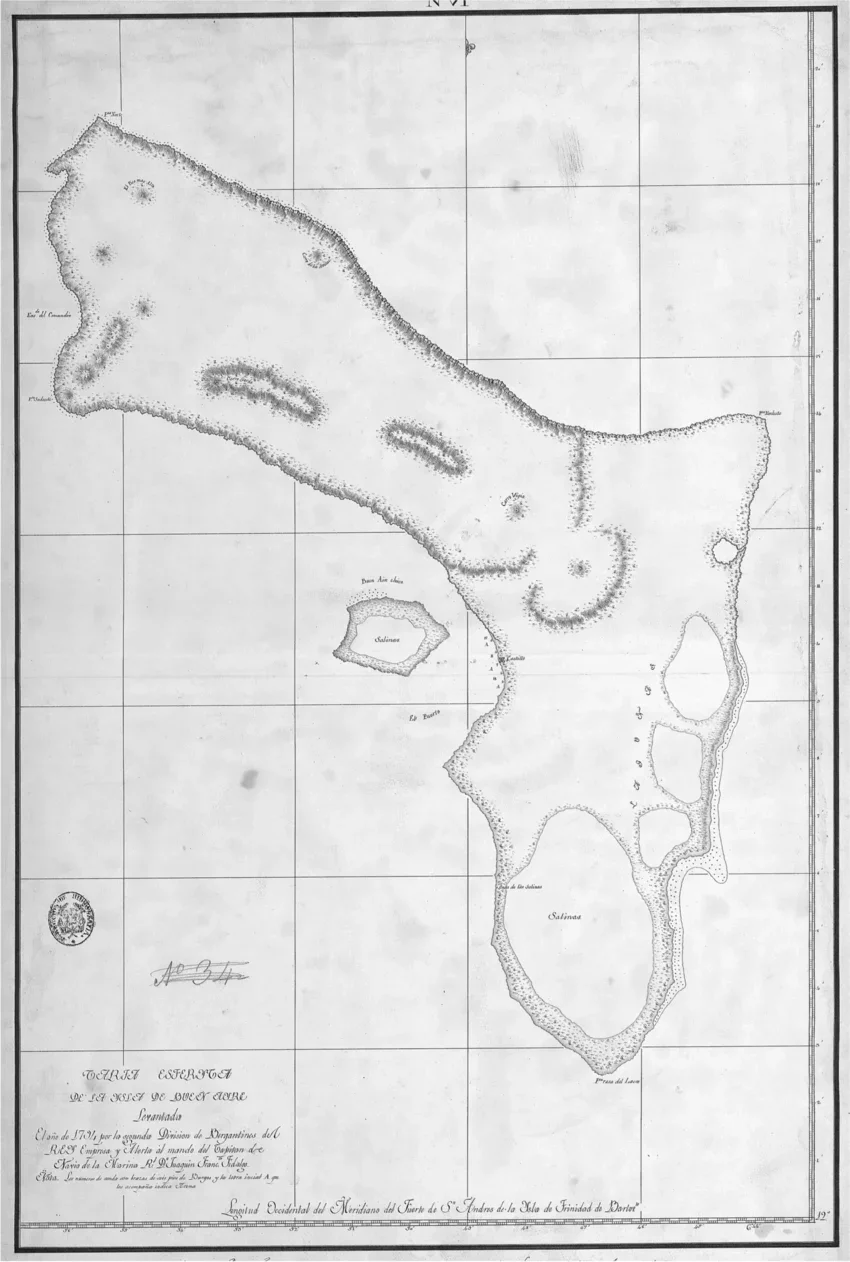
For some, the unequal treatment of islanders evokes the legacies of Dutch colonialism and even the Dutch slave trade, which conscripted Bonaire (as well as Aruba, Curaçao, and other territories in the Americas) in a centuries-long program of commodifying peoples abducted from western Africa (Mallory, Seidenstein, Burke, and Jackson 2025). In 2023, King Willem-Alexander formally apologized for the kingdom’s involvement in the “horrors of the slavery past” (Moses 2023). The case involving Bonaire is not settled: in April 2026, the Dutch government announced that it would appeal the ruling and asked that the judgment be suspended (Rijksoverheid 2026).
Christopher Snow Hopkins
References
De Kroon 2026
De Kroon, Eefie. Between Heat and Hope. Episode 3, “The Legal Strategy behind Greenpeace The Netherlands v. Netherlands (Bonaire Case).” Interviewed by Tessa Trapp. University of Amsterdam, 23 February 2026. Podcast, 46 min., 56 sec. https://climatelitigation.uva.nl/podcast/episode-3-the-legal-strategy-behind-greenpeace-the-netherlands-v-netherlands-bonaire-case.
Kaminski 2026
Kaminski, Isabella. “Dutch Government Discriminated against Bonaire Islanders over Climate Adaptation, Court Rules.” The Guardian, 28 January 2026. https://www.theguardian.com/environment/2026/jan/28/netherlands-government-discriminated-bonaire-islanders-caribbean-climate-crisis-adaptation.
Mallory, Seidenstein, Burke, and Jackson 2025
Mallory, Sarah, Joanna S. Seidenstein, Rachel Burke, and Kéla Jackson, eds. Art Museums and the Legacies of the Dutch Atlantic Slave Trade: Curating Histories, Envisioning Futures. Vol. 77, Brill’s Studies on Art, Art History, and Intellectual History. Boston: Brill, 2025.
Moses 2023
Moses, Claire. “Dutch King Apologizes for His Country’s Role in the Slave Trade.” New York Times, 1 July 2023. https://www.nytimes.com/2023/07/01/world/europe/netherlands-king-slavery-apology.html.
Rijksoverheid 2026
“Kamerbrief over hoger beroep in Klimaatzaak Greenpeace Bonaire.” Rijksoverheid, 10 April 2026. https://www.rijksoverheid.nl/documenten/2026/04/10/hoger-beroep-klimaatzaak-greenpeace-bonaire.
Van Beukering 2022 et al.
Van Beukering, Pieter. “The Impacts of Climate Change on Bonaire.” Institute for Environmental Studies (IVM) Reports 22, no. 6: 6–98. https://www.greenpeace.org/static/planet4-netherlands-stateless/2022/09/ceede030-ivm_r22-06_synthesis-report-2022.pdf.