
Art and Water Management in Noordwaard
In 2008, Paul de Kort converted a depoldered landscape into a labyrinthine work of Land Art.
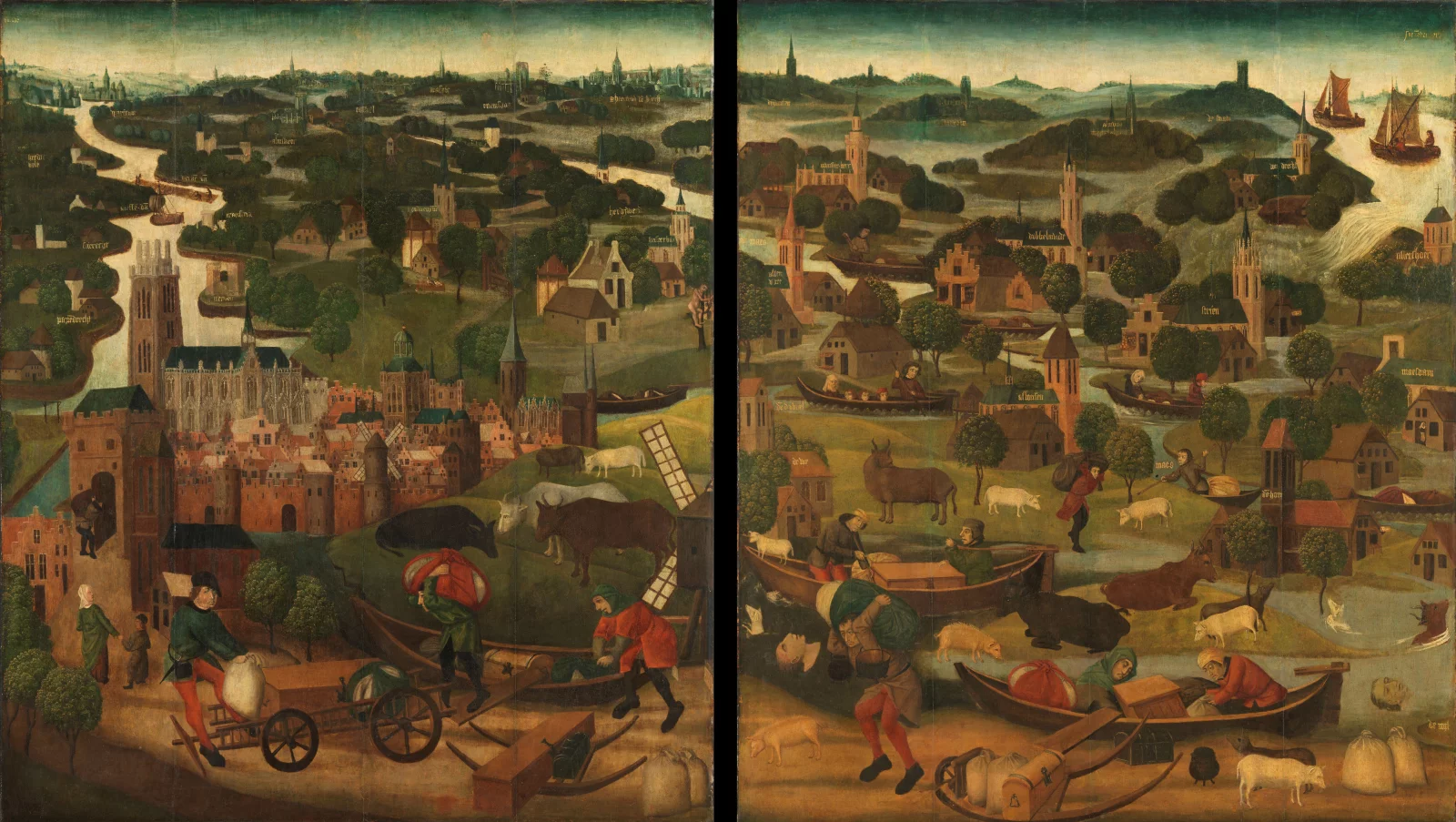
In 2007, the Dutch government launched a €2.3 billion program to reduce the risk of flooding from the Meuse river and two branches of the Rhine, the Waal and the IJssel. This project, titled Room for the River, aimed to boost the capacity of these waterways to cope with higher discharges connected to climate change. A sizable portion of the program’s budget—€300 million—was allocated for the depoldering of the Noordwaard, an 11,000-acre swath of farmland east of Dordrecht. This area was famously inundated on 19 November 1421—the feast day of St. Elisabeth—when surging water levels submerged twenty-three villages and killed two thousand people (Rijksmuseum, n.d.). That event is depicted on two panels at the Rijksmuseum (ca. 1490–95) that show water gushing over a levee, turning Dordrecht and its environs into an archipelago of cottages and churches.
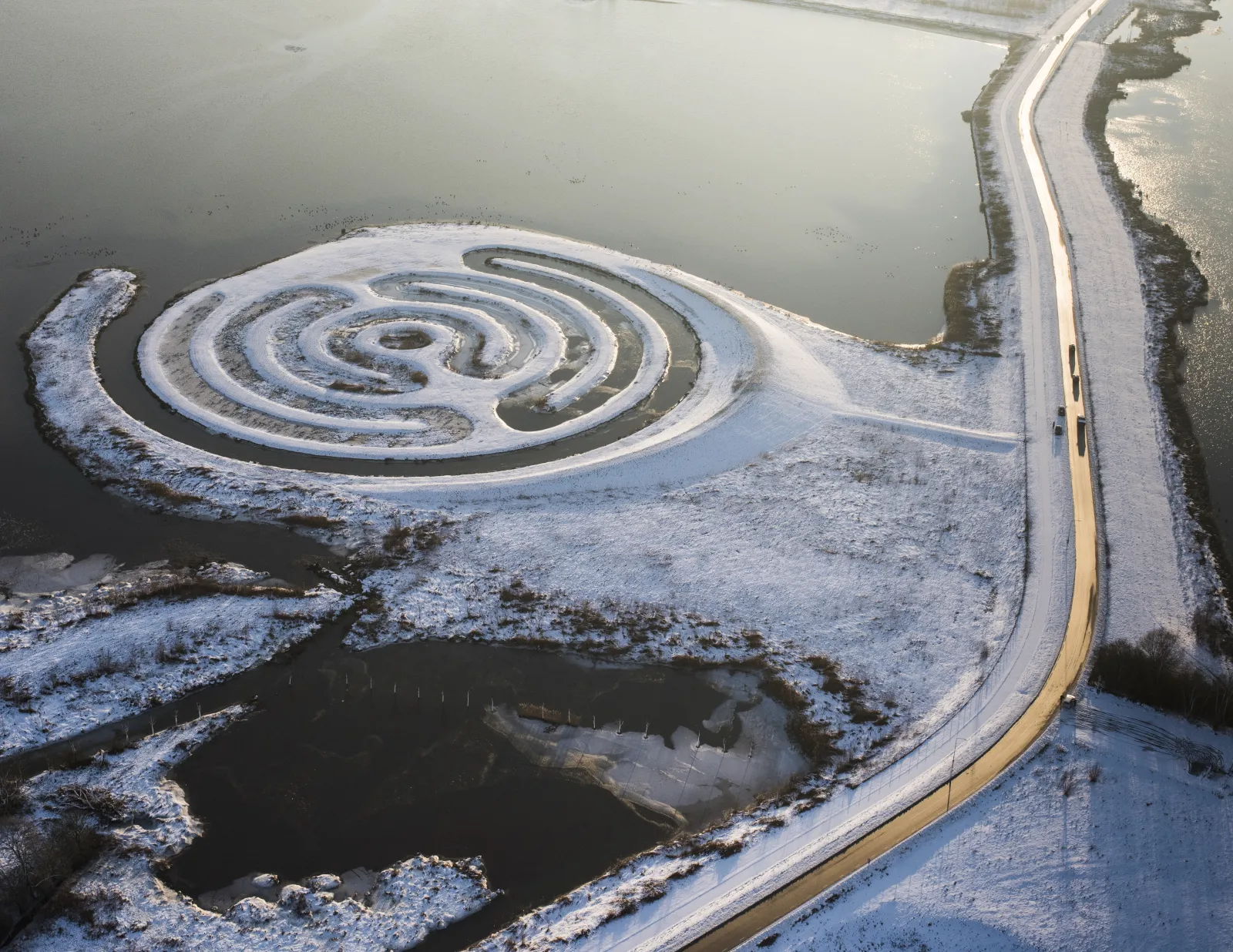
In 2008, Paul de Kort (b. 1961, Waalwijk) was commissioned by the Dutch government to execute a work of Land art in the depoldered Noordwaard. The resulting excavation, which covers an area of about ten acres, consists in a labyrinthine ditch that channels water from the surrounding wetlands as the tide surges and recedes over the course of the day. De Kort has said that he fashioned Wassende Maan (Waxing Moon) in the form of a labyrinth because it is a fitting metaphor for the Dutch relationship to water management, which “winds like a maze through our national history” (De Kort, n.d.). At the same time, some art historians see a parallel between a labyrinthine enclosure and the disorienting effect of climate change: “Today it is increasingly common to find ourselves in possession of ample data and predictions, but still paralyzed by the difficulty of locating ourselves within global problems and deciding where to turn and how to act within them” (Mainz and Bagnes 2018, 29).
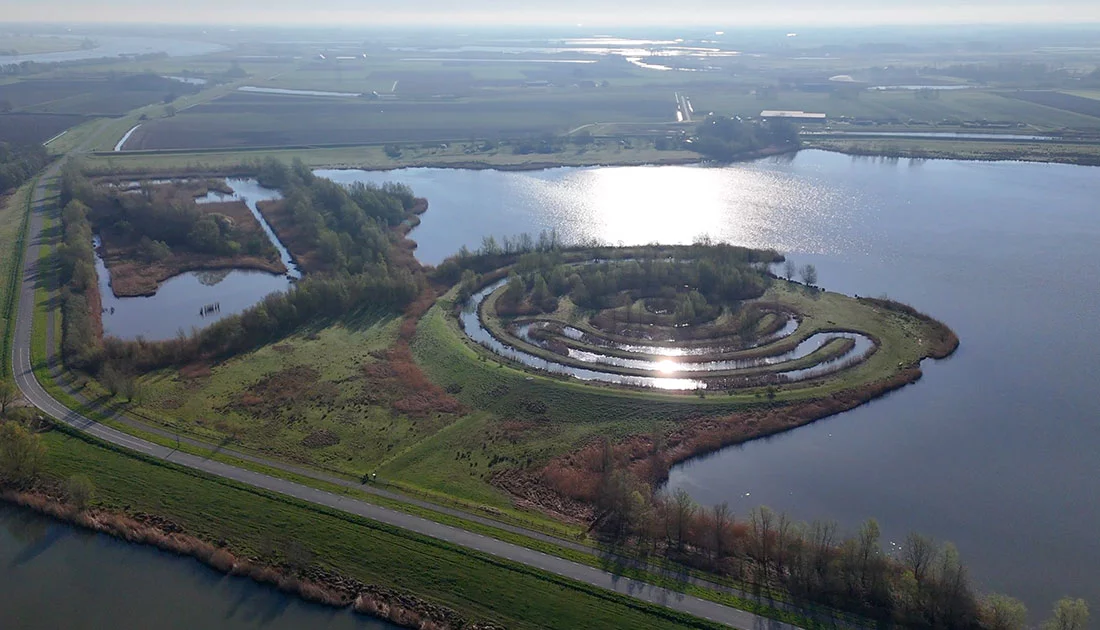
Beginning in 2015, when De Kort ceased maintaining his work, its embankments were colonized by reeds, alders, and willows. In 2025, the artist removed shrubs from one half of the watercourse, leaving the other half as a wild zone overgrown with bracken. In its current form, one side of the excavation discloses itself to the viewer while the other is masked by a thicket of weeds. As one ventures into this wild zone, “there are choices to be made and paths that lead nowhere. Behind every bend, there is a danger of getting lost” (De Kort, n.d.).
The depoldering of the Noordwaard exemplifies the way in which one cannot speak of climate change without speaking of climate justice. Room for the River was initially opposed by the Noordwaard’s farming community because it required a dramatic reduction in arable farmland. Ultimately, the Dutch government agreed to compensate the farmers who were forced to vacate their properties.
Christopher Snow Hopkins
References
De Kort, n.d.
De Kort, Paul. “Waxing | Wassende Maan.” Accessed 17 May 2026. https://www.pauldekort.nl/en/work/crescent/.
Mainz and Bagnes 2018
Dehlia Hannah and Stefanie Böttcher. Julian Charrière: An Invitation to Disappear. Exh. cat. Mainz (Kunsthalle Mainz) and Bagnes (Musée de Bagnes), 2018.
Rijksmuseum, n.d.
“The Saint Elizabeth’s Day Flood.” Accessed 17 May 2026. https://id.rijksmuseum.nl/200109491.