
Ecologische aandacht vormgeven: artistieke interventies in de menselijke psychologie en veengebied-ecosystemen
This PhD project investigates how artistic practices can reshape (or ‘compose’) attention toward peatlands as living entities through embodied experience, sensory technologies and ecological storytelling, supporting more relational approaches to restoration and climate justice.
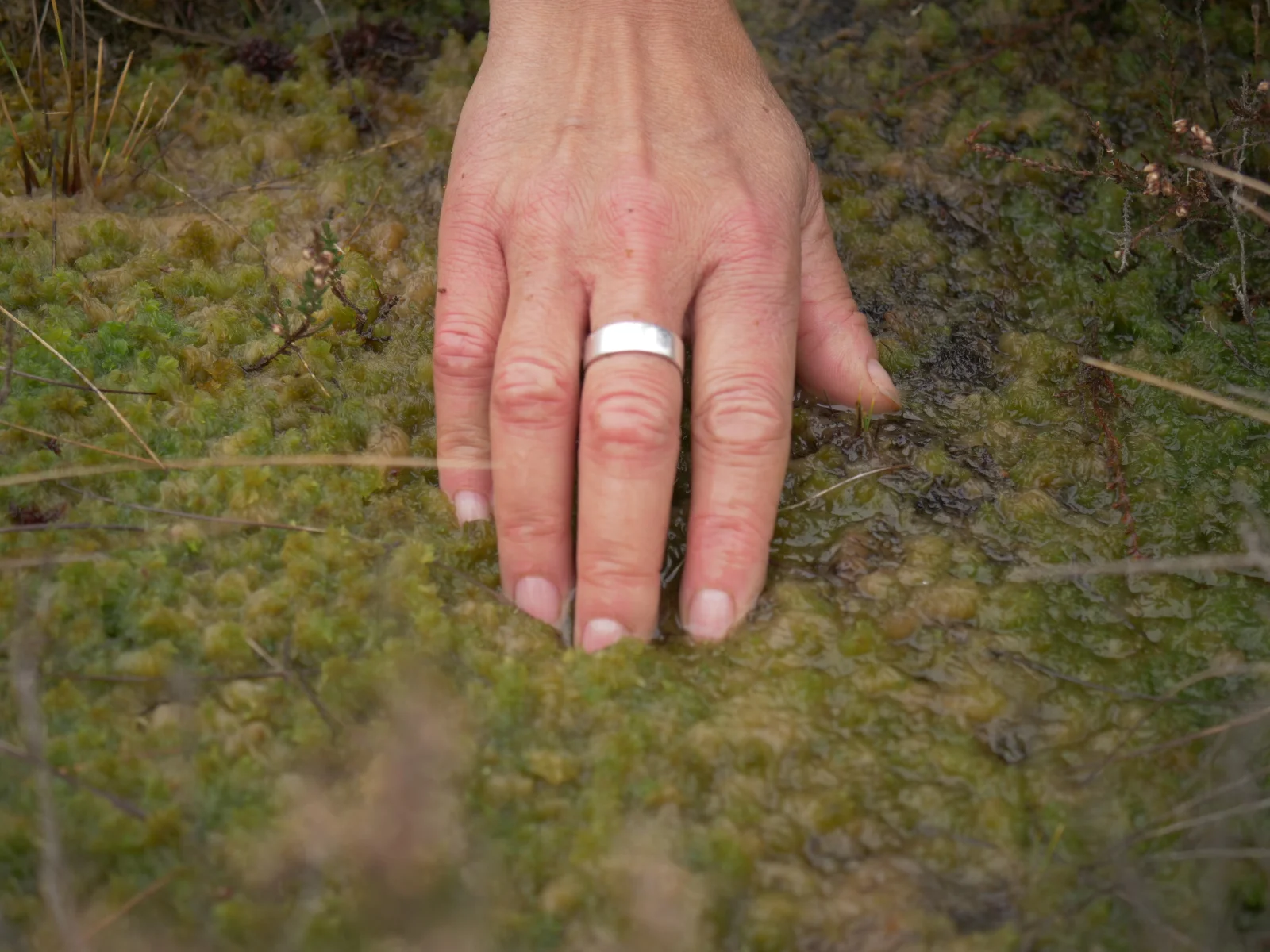
Within the broader theme of artistic research and climate justice, my doctoral project investigates how artistic research may create new ways of attending to, negotiating and imagining the futures of peatlands. My work takes as its starting point the notion of ‘composing’ ecological attention; where attention is not only part of an individual’s cognitive capacities, but it is something shaped through relationships with environments, technologies, stories and cultural practices. What gestures, encounters or narratives enable people (not just in an intellectual sense) to relate to ecosystems as living, interdependent entities rather than passive resources? ‘Composing’ is the senseful, ongoing cultivation of these relationships between one’s sensing body and the space one moves through, to shape what becomes perceptible, meaningful and worthy of care. It is that of engaging an individual’s embodied sensations and cosmological meaning-making systems towards a greater sense of connectedness with an ecosystem.
This project specifically investigates relationships between humans and peatlands. Peatlands are among the world's most important carbon-storing ecosystems, yet centuries of drainage, extraction and land conversion have severely degraded them, particularly in the Netherlands. Their restoration is essential for climate mitigation and biodiversity, but it also raises difficult questions about land use, livelihoods and competing human and more-than-human needs. Who benefits from restoration, who bears its costs, and whose interests are considered in decisions about the future of these landscapes?
By bringing artistic practice into dialogue with peatland science and restoration, my project also investigates how composing ecological attention might contribute to approaches to ecological transitions that take into account the significant transitions in human consciousness and culture that are necessary. However, rather than assuming a stronger sense of connection to an ecosystem will necessarily lead to more just outcomes, I will also examine the limits of artistic practice in making ecological interdependence felt and personally known, acknowledging the difficulties introduced by conflicting interests and unequal power relations. In this sense, this is where my artistic practice comes into conversation and collaboration with other fields, such as ecological restoration, environmental psychology, and, ideally, policy-making.