
Een baanbrekende tentoonstelling over kunst en klimaatverandering in Colorado
In 2007, Lucy R. Lippard organized an exhibition titled Weather Report. It was not the first exhibition on climate-change art, but it broke new ground in several key ways.
In 2007, Lucy R. Lippard organized an exhibition at the Boulder Museum of Contemporary Art, in the United States, titled Weather Report: Art and Climate Change. Bringing together fifty-one exhibitors, its explicit aim was to “make the hot breath of climate change both vivid and immediate to this visually oriented society” (Lippard 2007, 6). At that time, climate change was still lurking at the edges of human perception, a perturbation of the planet’s icehouse-greenhouse cycle that had been hypothesized by scientists but eluded direct observation. As Lippard remarked in the catalogue, “For most of us, global warming remains an abstraction that has not yet entered our own lived experiences” (Lippard 2007, 8). As a consequence, much climate-change discourse at that time focused not on climate justice—and how to redress climate injustice—but on debunking denialist narratives.
Weather Report was not the first exhibition dedicated to the intersection of art and climate change, but it differed from prior exhibitions on the subject in several key ways. Beyond its emphasis on place-based research—anticipating the situated turn many years later—it brought optimism and despair into a productive dialogue, deploying “both doomsday and inspiring modes of address in a dialectical fashion” (Dunaway 2009, 11). Moreover, it forsook “blunt didacticism” in favor of “allusive seduction,” approaching its subject indirectly rather than head-on (Boettger 2008, 206). Finally, the exhibition was leavened with irony, demonstrating that the most effective way to vanquish practitioners of denialism (or its cousin, apathy) may well be to mock them. The narrative video Exxon Vivoleum (2007), for example, documented a prank by the Yes Men for which two members of the puckish collective masqueraded as emissaries of ExxonMobil and the National Petroleum Council at a 2007 gathering of oil-industry executives. Before they were expelled from the conference, they delivered a presentation hawking “Vivoleum,” an energy source derived from human remains (Yes Men 2007).
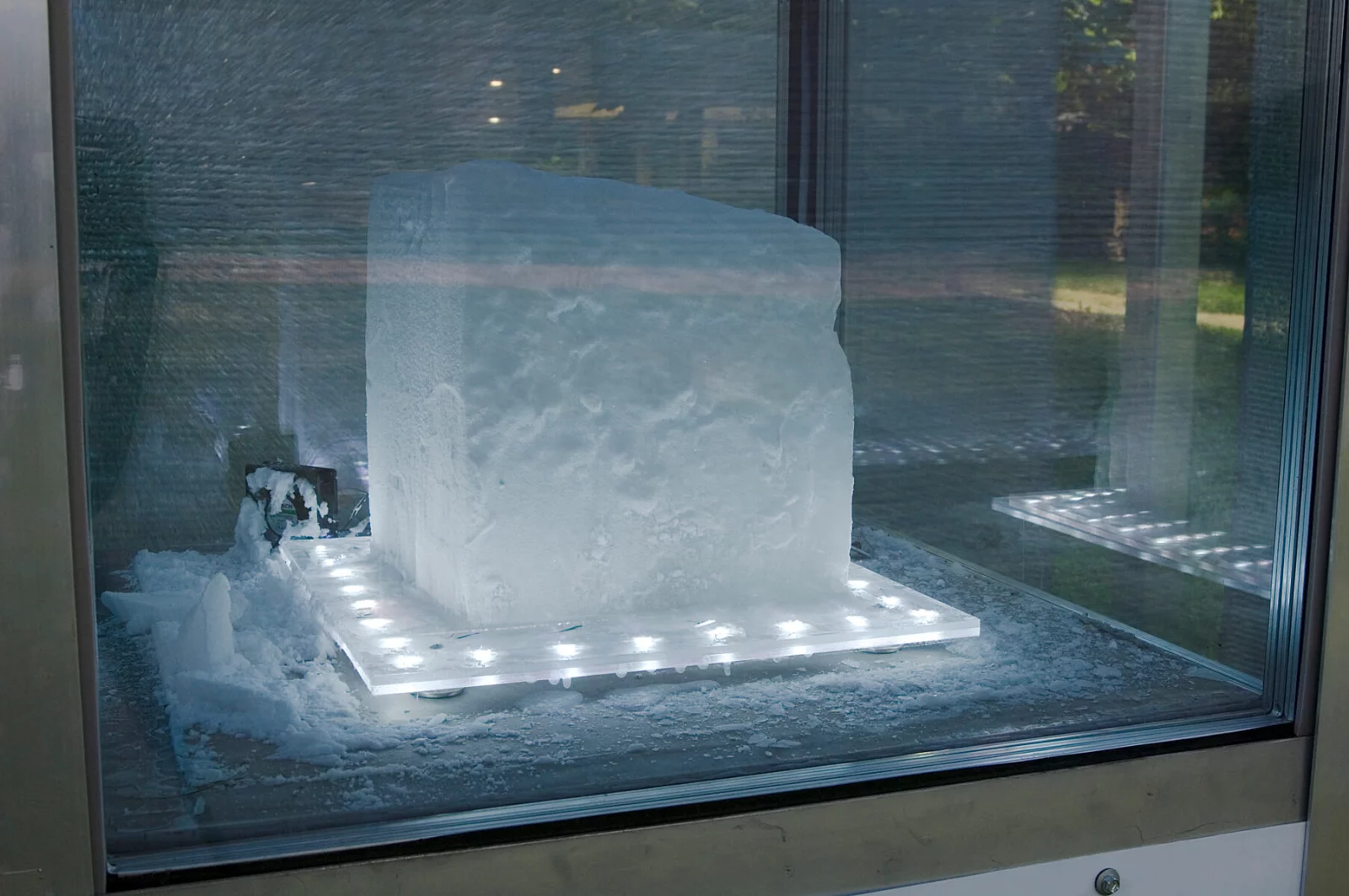
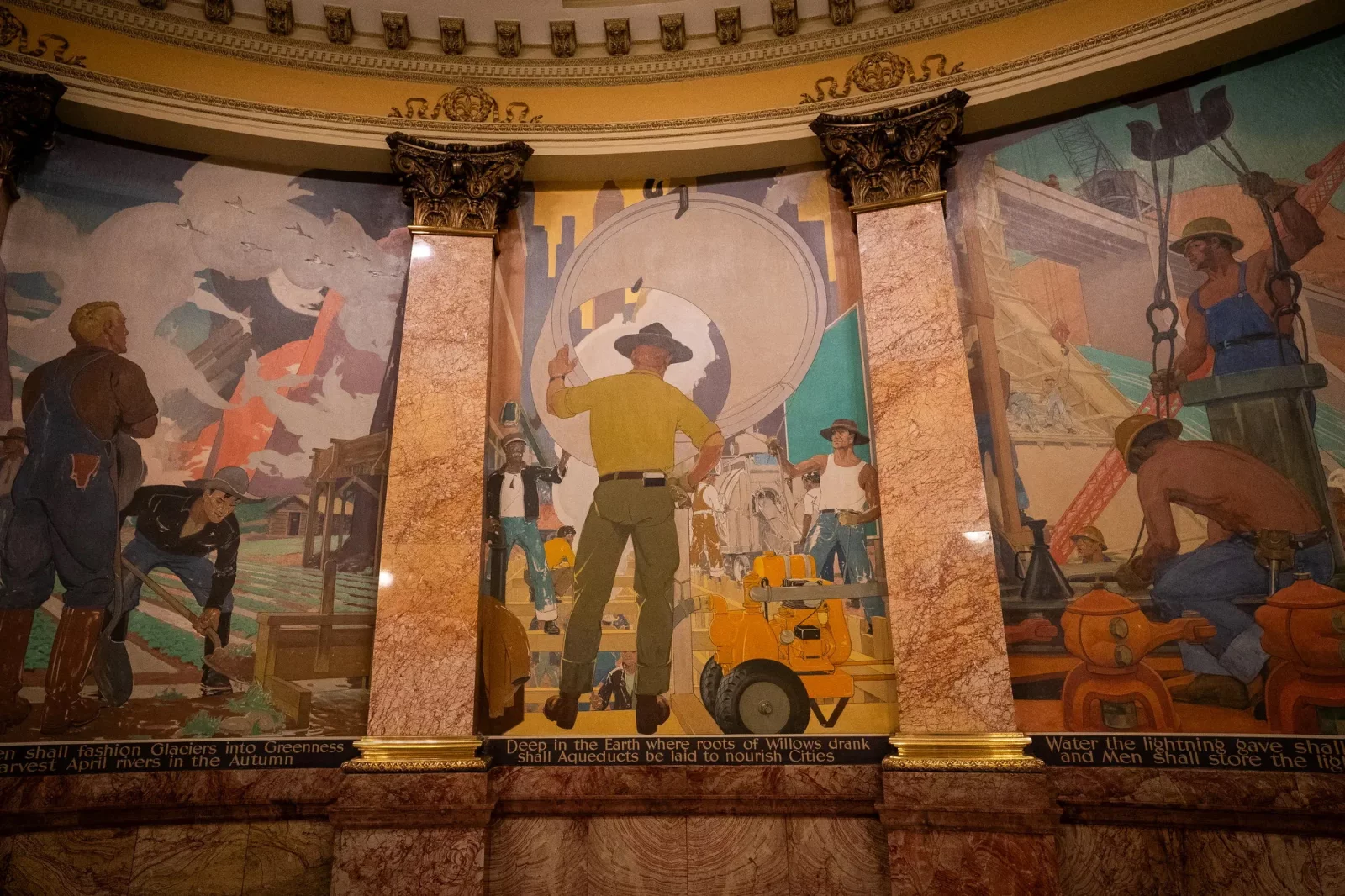
The exhibition extended well beyond the walls of the the Boulder Museum of Contemporary Art, reflecting Lippard’s view that “the days when artists accepted ‘cultural confinement,’ simply making objects to be exhibited in designated spaces, are long gone” (Lippard 2007, 5). Near Boulder’s public library, Brian Collier (b. 1970, Bay Shore, New York) installed The Pika Alarm (2007), a motion-activated audio player that emitted the shrill call of the titular species, an alpine rodent resembling a hamster. The installation was accompanied by postcards explaining that the charismatic varmint was threatened with extinction by ever-rising temperatures. Elsewhere, the local artist Jane McMahan collaborated with glaciologist Tad Pfieffer on a solar-powered life-support apparatus for a fragment of ice from nearby Arapaho Glacier. In the catalogue, McMahan cites an inscription under a mural in the rotunda of the Colorado State Capitol: “And men shall fashion glaciers into greenness and harvest April rivers in the Autumn” (Boulder 2007, 86). This inscription by the former Colorado poet laureate Thomas Hornsby Ferril (1896–1988) likely alludes to the project of Manifest Destiny—what was thought of as the divinely ordained conquest of the continent through the hardiness and resilience of settlers moving west—but in this context reads as an ironic comment on the folly of humanity as it quests after paradise but inadvertently fashions hell.
Fourteen years after Weather Report opened, Lippard contributed a revised version of her essay to a compilation of texts addressing the intersection of contemporary art, visual culture, and climate change (Demos, Scott, and Banerjee 2021). In it, she repeats her statement about climate change breathing down the neck of humanity—but with a few key differences (italicized): art can “make the hot breath of climate disruption both vivid and immediate to this speed-addicted, visually oriented society” (Lippard 2021, 47). The phrase “climate disruption” places a greater emphasis on the potentially catastrophic effects of anthropogenic changes to planetary chemistry. As for the addition of “speed-addicted,” Lippard seems to be acknowledging that the gap between deep time and human time is growing ever wider: as we gorge on fossilized sunlight, climate change (or disruption) creeps toward us like a big cat stalking its prey.
Christopher Snow Hopkins
References
Boettger 2008
Boettger, Suzaan. “Global Warnings.” Art in America 96, no. 6 (2008): 154–61, 206–7.
Boulder 2007
Weather Report: Art and Climate Change. Exh. cat. Boulder, Colorado (Boulder Museum of Contemporary Art in collaboration with EcoArts), 2007.
Demos, Scott, and Banerjee 2021
Demos, T. J., Emily Eliza Scott, and Subhankar Banerjee, eds. The Routledge Companion to Contemporary Art, Visual Culture, and Climate Change. New York and London: Routledge, 2021.
Dunaway 2009
Dunaway, Finis. “Seeing Global Warming: Contemporary Art and the Fate of the Planet.” Environmental History 14 (2009): 9–31.
Lippard 2007
Lippard, Lucy R. “Weather Report: Expecting the Unexpected.” In Weather Report: Art and Climate Change, 4–11. Exh. cat. Boulder, Colorado (Boulder Museum of Contemporary Art in collaboration with EcoArts), 2007.
Lippard 2021
Lippard, Lucy R. “Describing the Indescribable: Art and the Climate Crisis.” In Demos, Scott, and Banerjee 2021, 45–53.
Yes Men 2007
Yes Men. “Vivoleum.” Harper’s Magazine (October 2007): 17–22.