
Terike Haapoja
Terike Haapoja is an artist and researcher interested in the politics rights of non-humans
Terike Haapoja (b. 1974, Helsinki) promotes the political rights of the more-than-human, focusing on subjects such as animality, posthumanism, the human oppression of other species, and “mechanisms of othering in biopolitical capitalism” (Haapoja, n.d.-a). Haapoja’s versatile practice—which includes large-scale installations and participatory conceptual projects—seeks to foment a multispecies insurrection while combating the anthropocentric bias baked into Western cultural institutions. Her work is fundamentally speculative, giving form to alternate worlds by subverting “an ideological solipsism . . . where only one reality prevails” (Haapoja, n.d.-a).
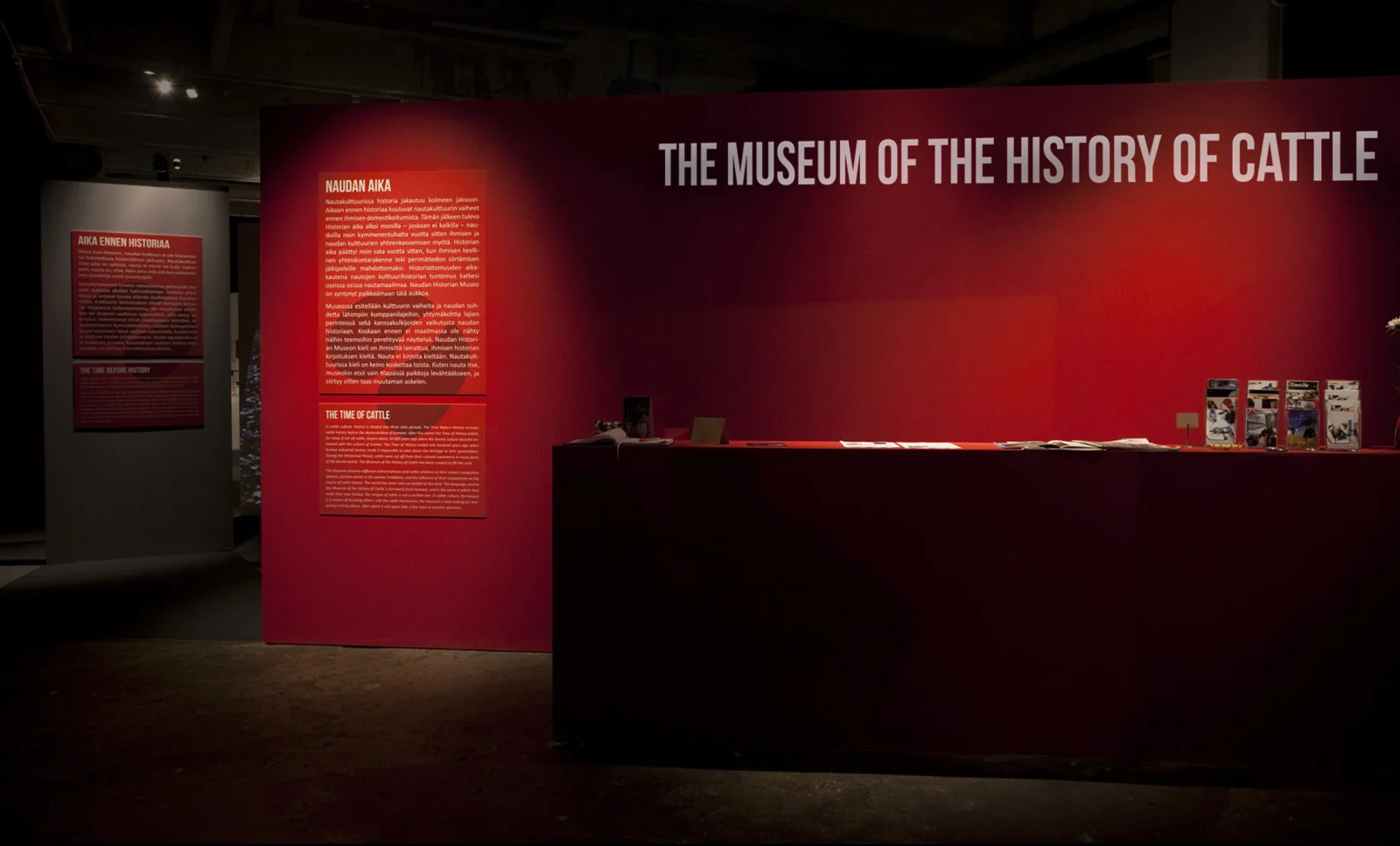
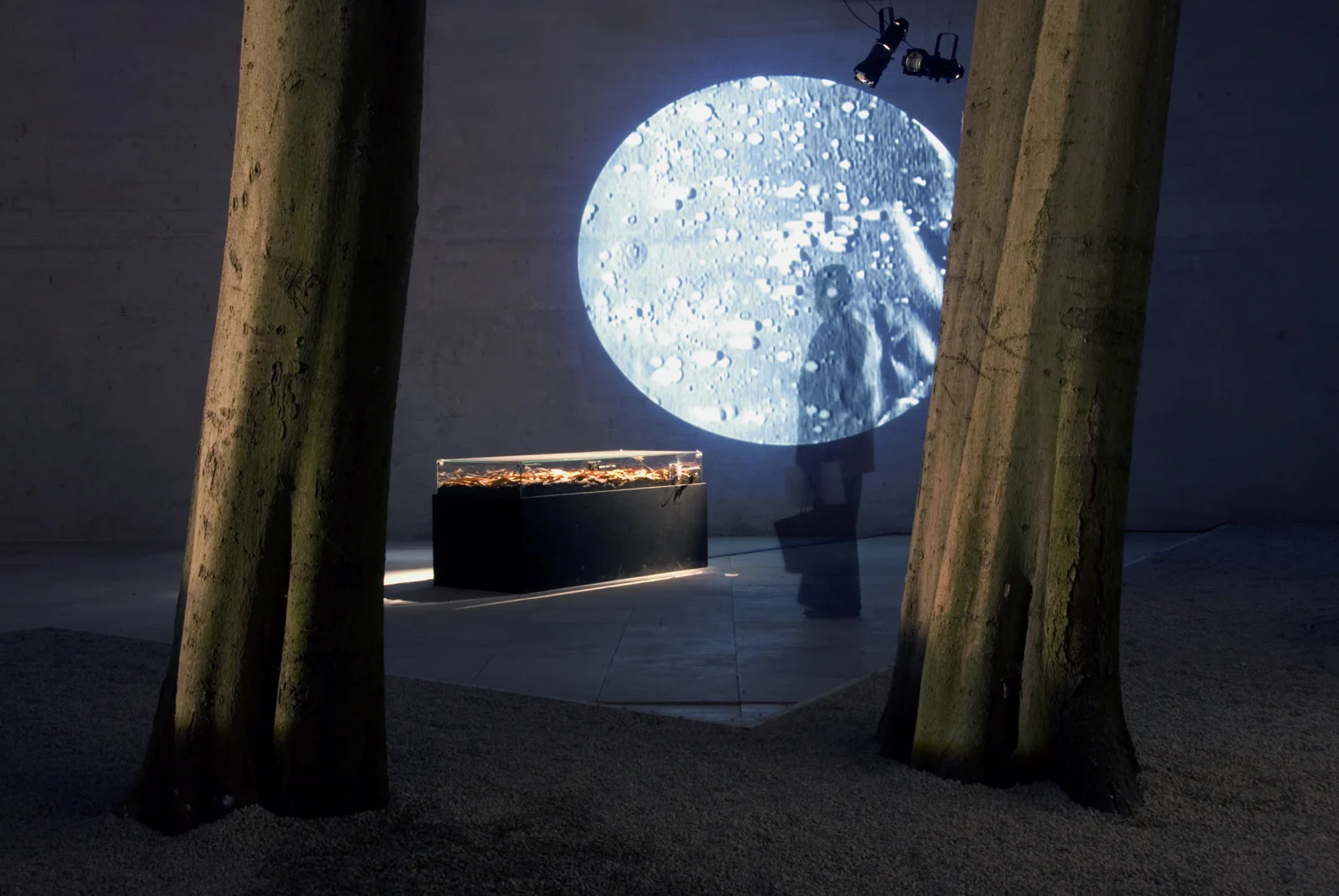
In 2013, Haapoja represented Finland at the 55th Venice Biennale, where she installed seven works in the Nordic Pavilion that materialized biophysical processes such as soil respiration and photosynthesis. For Inhale—Exhale (2008/2013), the artist deposited soil and moldering leaves in a coffin-sized vitrine outfitted with ventilation fans. As the leaves decomposed, they produced carbon dioxide that was measured by a sensor and “sonified,” or converted into an audible whoosh (Haapoja, n.d.-b). The result was an apparatus that seemed to breathe, periodically exhaling carbon dioxide into the air that it shared with viewers. Another work in the Nordic Pavilion, a single-channel video, showed the death of trillions of bacteria and parasites. To make the piece, the artist rubbed her face with a swatch of canvas and then filmed the displaced microbes, which died within nine days of being banished from their human habitat. As the artist explains: “This work can be considered a [self-portrait] because bacteria are part of us. . . . We are not individuals, but communities of species” (Weintraub 2012, 201).
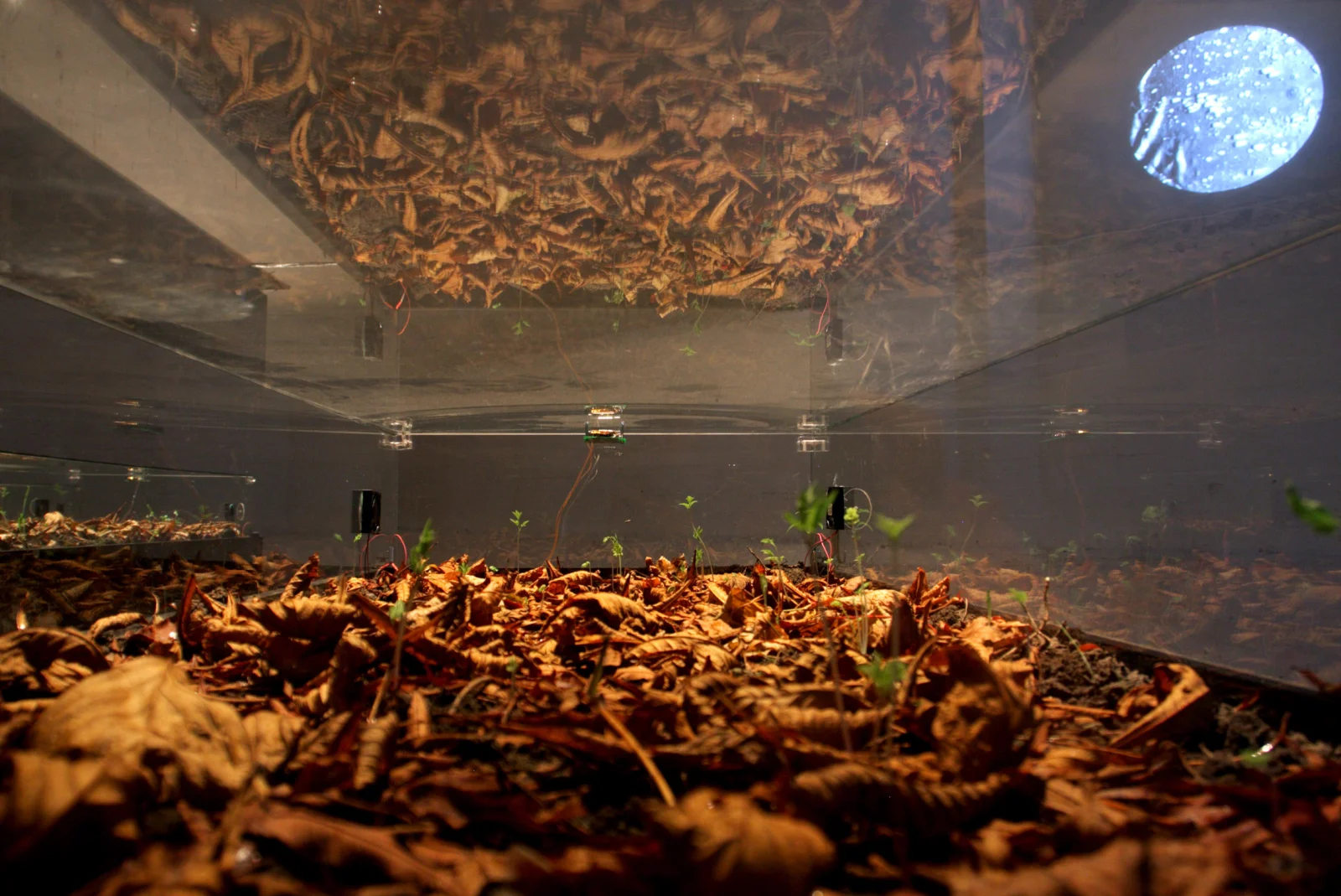
In other works, Haapoja gives voice to non-human species by translating their thoughts into human language. The Museum of the History of Cattle (2013), for instance, recounts the co-evolution of humanity and cattle from the point of view of a bovine narrator. In this pop-up museum, humanity is framed as a pest that, like the housefly (Musca domestica), has menaced cattle for millions of years: “Though different in size, both are invasive species that can live in harsh conditions and populate most of the earth” (Haapoja and Gustafsson 2015, 294). The Museum of the History of Cattle chops up bovine history into three intervals: Time before History (prior to the domestication of cattle), Historical Time (after the domestication of cattle but before the industrialization of the livestock sector), and Ahistorical Time (our present epoch). The display asserts that intensive animal farming has not only severed the affective bonds between cattle and humanity but expunged bovine culture: “Now we [cattle] live inside the factory. It has become impossible to pass on any heritage. Calves are taken from us immediately after being born, and family lines are scattered out of our sight. . . . Stuck in the industrial process we live in collective isolation, cut off from all relations that could anchor us to time, history, or culture” (Haapoja and Gustafsson 2015, 294).
To remedy the ills of Ahistorical Time, Haapoja convenes political bodies like The Party of Others (2011), a coalition of the more-than-human that advocates nonhuman legal personhood. This enterprise is “paradoxical but not ironical, [seeking] to both show the limits of human-centered representational democracy and legislation, and provide an actual platform for a non-discriminatory, eco-centric political utopia” (Haapoja, n.d.-b). In conjunction with this initiative, the artist conducted interviews with ecological theorists and then piped a musical arrangement of their voices from speakers at a gallery in Helsinki. This insurrectionary polyphony was accompanied by a three-channel video projection with a text animation that visualized “how the subjective, uncertain chatter of the interviews gradually transformed into political fact and ideological agenda” (Haapoja, n.d.-c).
A Mentor Artist for the JUST ART consortium, Haapoja received the Guggenheim Fellowship in 2022. She frequently collaborates with the writer Laura Gustafsson, with whom she has made works such as No Data (2021), Becoming (2020), and Waiting Room (2019). Haapoja is based in Berlin.